Tuesday, May 19, 2009

Wed. 5-20-09 WOD

Nicole & Coach Danny Aguirre

Warm-Up: 3 Rounds (10 sec. rest between exercises)
60 sec. Planks + 30 sec. Push Ups + 60 Squats + 60 sec. Cross legged sit ups + 30 Sec. Mountain Climbers + 30 sec. each leg Stationary Lunges

W.O.D.: AMRAP in 20 min.
20 yrd. KB Walking Swings Right (Hand Down/Left Hand Back)
10 Sandbag or Medball Clean & Presses
Just came across this great food article and shopping list from another CrossFit affiliate and trainer while on the CrossFit nutrition forum . Check it out and let me know what you think.

Shopping
I am stunned by a few facts:
1-People do not know how to cook in general. Microwave meals and fast food seem to predominate. Sandwiches and other grab-n-go crap are the norm. Food quality matters. You need to learn how to cook. Acknowledge, accept, move on.

2-People are “too busy”. If you are “too busy to cook” you need to reevaluate your life. How much time do you spend watching TV? Be honest and realistic because if you legitimately do not have time to feed yourself correctly you are heading towards serious health problems.

3-People go absolutely fetal if they do not have their bread, rice, pasta and all the other garbage carbs. Inevitably the question arises “how do I cook this?” It is simply a cover for “I want my comfort food”. If you want results you need to alter what you are doing. I know this seems obvious, but apparently it is not! If you want to keep doing the same old thing join a Globo gym, don’t go (most people don’t) and keep eating what you have been eating. Wasn’t that easy?! Not surprisingly you will continue to get the same results.

4-As day follows night, eating can only follow shopping. You cannot and likely should not eat out all the time. That means you need to stock your pantry and have the vittles on hand to cook nutritious, possibly even tasty meals. Hence the handy guide that follows. You CAN do this. We have clients who are not very bright (not naming names) who do this. They are committed and will not accept failure. If they fall off the pony, they get up, catch the lil’buggar and get back on. If you are not committed to this please step away from the ride, do something else and leave this hour open for someone who will listen, grow and reap the rewards this program can offer. All right, enough finger wagging, here is your shopping guide.

Fruit & Veggies-
Trader Joes has a great selection of frozen berries and
Vegetables. Hit the farmers market and buy what is in season. Avoid bananas and other tropical fruit. Buy local. FoodMax actually has a very good produce section. I think they sell enough volume that they constantly turn the stock over. Many of the supermarkets have anemic looking produce sections…I’d swear I see the same avocado from week to week in one store. Try buying some non-traditional veggies like Napa cabbage and some other goodies. Expand your horizons for crying out loud! That said however you should ALWAYS have the following in the freezer from Trader Joes:
Broccoli, green beans, asparagus, blue berries.

TJ’s has some other frozen veggies that are good but you MUST have these on hand. You can easily throw together a meal with some meat or chicken and a half bag of these veggies. Remember the excuses above of not having enough time? Keep this stuff on hand and you will have no problems. FYI-We make random checks to peoples homes to verify veggie stocks…just kidding, but man we should!

Fresh meat-
Trader Joes is good for grass fed meat. This is your first choice with all varieties of meat. Grass fed is better than organic. Free Range chicken, wild meat if available. Conventional cuts like London broil for beef and pork loin are good options if the organic and or grass fed options are not available. The Chico State farm is an excellent source but they are only open Thursday and Friday so plan ahead. Costco has good prices and good quality. Stock up! People tend to make bad food choices when they run out. Don’t be on of “those” people.
Vegetarian? Find another trainer, I will not work with you. You won’t make progress and all we will do is argue. Someone else can take your money and watch you not make progress.


Fish and shellfish-
S & S-is the place locally.

Trader Joes (No, I do not have stock in them) has a good selection of frozen fish and shellfish. They also have a canned Wild Alaskan Salmon. Great stuff for salads. When you buy any type of salmon make sure it is WILD. “Fresh” does not mean wild. They also carry a mild sardine called “Bella Olhao”. I cannot stand other sardines. These are actually pretty darn yummy. Again great for salads, just pour in the olive oil they are packed in.


Raleys- They are another good seafood option. They carry some less popular fish like mackerel that are pretty strong tasting but amazingly nutritious. BBQ mackerel outside or your house will smell like fish for a year. Raleys on east ave. is pretty good. Notre Dame…not nearly as good.

Eggs- Omega-3 enriched only. Costco has a great deal on these and they are top quality. Trader Joes is even better! Any major supermarket carries these however.

Store Interior:
Coconut milk- If you like curries this is a great carrier. Safeway and Raleys carry a Thai brand “ Chakoh”. No idea on the pronunciation. The two Asian food stores in town carry this one as well. Just a personal favorite but any coconut is good coconut milk.

olive oil- Pacific Sun or one of the other top shelf brands will lighten your pocketbook a bunch but they are amazing. You get what you pay for with olive oils. Trader Joes has a good base model that is ~$7.99/liter. This is a good day-to-day olive oil.

Tomato paste/sauce Trader Joes to the rescue again. They have a canned marinara called “Sugo di Pomodoro”. You can pour this over any meat/veggie dish and LOVE it.

Spices- The more the better. If you do not know how to cook, learn. We have a DVD in the works. Google specific recipes, look for examples on youtube. If you MUST watch television then watch the food network…unless Battle Star Galactica is on. You MUST watch BSG.

Green tea-Any
Coffee- Raleys carries an espresso called “CafĂ© La Llave”. Buy a stovetop espresso maker from Pete’s coffee and prepare to get wired.

All Items listed below can be found at either Trader Joes, the Farmers Market or S&S produce.

seeds
nuts (raw, but not cashews or peanuts)
nut butters
organic fruit and vegetables
unsweetened coconut flakes
nut flours (almond, pecan, and chestnut)

Based on the shopping list you could probably figure out what you are supposed to eat…here is a hint: it’s not bread, rice, pasta nor potatoes. What IS on the menu? Glad you asked:

Protein - Every Meal:
Chicken – 3-4oz
Beef – 3-4 oz
Fish – 3-4 oz
Eggs – 2-3 whole eggs

Now…I’m assuming you are pretty sharp but oddly enough a few things seem to slip by people…repeatedly. When I say “every meal” I in fact mean EVERY BLESSED MEAL. This is especially critical if you are trying to lose body fat. Another frequently confused point is the topic of “protein”. If you are fighting for survival in a 3rd world country then yes, beans and rice count as protein. At NorCal S&C it most assuredly DOES NOT. You need chicken, beef, fish, pork lamb, turkey…are you picking up what I’m putting down? If you think beans, nuts or Tofu count as protein please re-read the vegetarian clause above and follow those directions appropriately.

Vegetables - Every Meal:
Vegetables – all varieties…as much as you want, especially:
Broccoli
Spinach
Kale
Cabbage
Asparagus
Onions
Tomatoes

Newsflash-More vegetables exist than those listed above, you may eat those…unless they appear on the “no-no” list below.

Fat - Every meal:
Nuts: raw or LIGHTLY roasted and preferably unsalted – small handful
Almonds
Cashews
Pecans
Walnuts
NO PEANUTS

Avocado – ½ of medium sized one
Olive Oil – use as salad dressing – 1-2 Tbs.

Newsflash 2- Fat does not make you fat. We recommend a moderate to low carb diet. It is healthy and effective. Ask questions, check blood lipids but for crying out loud, just do this stuff for a month! Do you see ANY processed food in this? Any sugar? Trans fats? No, no and no. It’s whole, natural foods and you will thrive on it.


Fruit – Occasionally, always with protein!

In order of preference:
all berries
melons
oranges
grapefruit
tangerines
apples

Eat what is in season and local.


Coffee – Espresso or Americano’s only – preferably black - no sugar or artificial sweeteners!

ABSOLUTELY NOT!

All flour products (bread/cake/cookies/scones/tortillas/pastries etc.)
All sugars
No Jamba juice! – too much sugar!
No Dairy (cheese/milk/butter/cottage cheese, etc)
No Mochas, No Latte, No Frappaccino’s
No Artificial Sweeteners
No potatoes, corn beans or other starchy vegetables
Now…similar to the admonition to “eat this at every meal” the “absolutely not” category means….don’t eat it! You have a month of introduction in which we will help you get your insulin levels normalized, clean up your digestive health and likely a whole slew of other considerations, all while losing fat and feeling better.

After a month you can tinker with re-introducing some of the banned foods, but you need to know that non-compliance in the first month is grounds for termination. No messing around. I have limited time and love what I do and I WILL NOT waste my efforts on someone who cannot hang in at least a month. Like I said previously, there are a slew of trainers who are fine with taking your money and allowing you to continue along with bad nutrition. Not me. You will get results; you will feel and look better. Why? Because you followed these guidelines and reaped the benefits from sound training and nutrition.

Monday, May 18, 2009

Tues. 5-19-09 WOD

Powerlifting Divas
(We'll miss you Nicole)
Warm-Up:
5 x 100 yrd. Runs(rest 30 sec. between rounds)
Partner band rows 5 x 60 sec. w/20 sec. rest between rounds)

W.O.D.: 30-20-10 reps of each
Wall Ball + Farmer Carry Overhead 100 yrds. KB + Pull-up or ring rows
photo by jbelluch

It seems everyone want to lose weight, but with all the information out there it just gets more and more confusing for the average person to know what to do? Let’s back it up a little and start from the basic understand of how fat loss happens in a simple and easy manner. Once you can master the basics, that is probably 90% of where all your results will come from!

Fat loss first and foremost is a hormonal event, the right hormones telling the body to release the stored “energy” in the fat cells to burn off. It is also important to know that there are also fat “storing” hormones that act in the opposite way, triggering the body to store “future energy” into the fat cells. The body triggers these hormones through many different stimulus like food, drink, exercise, stress and sleep. Fat cells are just the body’s emergency storage tanks afterall. If we didn’t have fat cells, we wouldn’t have survived the famines of the past. It’s a built-in survival mechanism that is getting all the wrong signals today. The body wasn’t designed around constant intake of food, especially the processed and high in sugar kind. (as that is not something that naturally grows on trees!)

So we know that fat loss is hormonal. Also fat loss occurs when oxygen is present, what is known as aerobic. (which means “with oxygen”…don’t get all happy yet all you daily joggers) The other stage is called anaerobic (which means “without oxygen”). Anaerobic training is also known more commonly as “strength training” (which you can tell by the lactic acid burn). Here’s where people get confused when it comes to exercise. Most people think that by doing aerobics you burn all the fat you want. Well if that was the case, obesity would of been taken care of in 1986 and your gym aerobic instructors wouldn’t have an average BF% over 25%. Who ever said you are guaranteed to burn fat? What about stored glycogen? Plus if you can burn fat in an aerobic state, well aren’t you in an aerobic state all day long (minus brief times of anaerobic activity) including sleeping?? So here’s the breakthrough, you have the ability to burn fat all day long! The only thing left is the hormones and whether they are saying “empty the storage tanks” or “here comes some more” to the fat cells.

The Fat loss hormones were are going to focus on briefly are insulin, glucagon, and growth hormone (GH). Insulin is a fat storing hormone, while glucagon and GH are fat burning hormones. If insulin is present and elevated, the other hormones go down (this is an important relationship to realize). Another hormone called cortisol (stress hormone) is a muscle breakdown hormone….and that is not something we want in our fat loss quest. Below are just quick and easy bullet point on how to maximize the fat burning hormones and minimize the muscle breakdown/fat storing hormones (don’t think all muscle breakdown is bad, you need to break down and rebuild the cells it’s when you have excessive breakdown and minimal rebuilding that is the issue as that will lead to a loss of muscle).

Your #1 enemy, sugar and all it’s hiding places (drinks, sauces, dressings, etc). If it has a label, read it and see what sugars you are really getting, as everything you put into your mouth counts! Why is sugar bad? Because sugar will be quickly absorbed into the blood which cause a spike in your blood sugar and with that spike the body releases insulin to take care of it (shuttle excessive blood sugar into the fat cells for storage!). So like I tell my clients, every time you put sugar into your mouth just tell youself “I don’t feel like burning fat for the next 3-4 hours” as that is exactly the hormonal signal you are giving it. Remember also, when insulin is high glucagon and GH go down (this is important to remember especially at night)

So let’s recap, for fat loss we want:
Minimal insulin levels thoughout the day (no high levels/spikes except during the post workout window when the insulin sensitivity is maximum, it goes into muscle not fat)
Maximum Glucagon (which is directly inversely proportional to insulin levels)
Maximum GH (which is controlled by insulin, exercise response and sleep)
Keep Cortisol in check (you will have some, but excessive will lead to muscle loss)
For Insulin control (and max Glucagon response):

Keep levels low by not eating sugar or foods that quickly break down into the bloodstream
Have protein with every meal (as that will slow down the digestion of any sugars). Also protein intake stimulates the release of glucagon.

Improve insulin sensitivity with glycogen draining exercise (resistance training) which will in turn reduce your insulin resistance (which is one of the biggest reasons for obesity and a serious increase of risks for many other diseases including heart disease, cancers, diabetes, accelerated ageing and more!)

For max GH response:
Most of your daily GH is released in the first couple hours of sleep at night (75%) . Keep your insulin levels low (which means no big meals or sugar 2-3 hours before bed) and get to bed by 10pm to get the maximum response

Exercise with Intensity (for fast twitch muscle recruitement, not slow twitch), whether it is resistance training or doing interval training like sprints. Short burst of anaerobic intense exercise (lactic acid burn) will in turn signal the body to release GH. Long aerobic activities (jogging, etc) will NOT. (The old arguement of look at the body composition of a sprinter vs the marathon runner…the sprinter has more muscle and very low bf%, the marathon runner has little muscle and a higher bf% even if they look smaller) See the role of lactate in exercise induced GH response.

Exercise in a fasted state has also shown to increase GH levels (again make sure you have enough energy to get through the workout, a small meal may be needed 1-2 hours prior if the activity it too intense)

Minimize excessive Cortisol:
Keep all exercise under 45min (remember we want to increase the intensity in a short period, not the duration). Anything longer will just start wasting muscle as fuel.
Practice relaxing throughout the day, don’t stress out over things that mean very little in the long run (ask yourself will this really be important in 1 week, 1 month, 1 year). Get perspective on things in your life, and detach from things that really don’t matter. Smile more, take deep breaths throughout the day, get out in nature, find your passions in life, etc. We are too stressed out and our body was only meant to use stress in short bursts (fight or flight response) not all day long events.

So if you can master these small steps, you will see tremendous changes. Now what if there was something else you could do to decrease insulin resistance and improve GH response to exercise and sleep? Hey how about something that also helps the health of the gut, improve digestive process and liver function (which is an important organ for fat burning). Hmmmmmm…..could that be Intermittent Fasting?? Wow….look how everything starts to nicely come full circle!
(Personal Note: If you like what you read, please feel free to tell a friend about it. You have my permission to resend any emails to anyone as long as the article is in it’s original content and credited to www.theiflife.com. It’s my job to get the right info to you, and hopefully our job together to start spreading the word for better health for everyone. Oh yeah I am also playing around with the format on the so let me know if that works well in the RSS reader or emails..or if you like the longer page format instead)

Sunday, May 17, 2009

2009 D & D Push/Pull Extravaganza

2009 Evolved Athletics Powerlifting Team


Sarina Benching

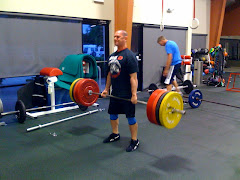
Nick Deadlifting


Andy Benching

Lindsay Deadlifting


Lindsay Benching


Kristina Benching


George Benching


George Benching


Sarina Deadlift Warm Ups


Carman Benching


Darian "BIG D" Benching


Arthur Benching


Andy Benching


Darian "BIG D Benching

2009 D & D Push/Pull Extravaganza
Hosted by: Evolved Athletics


This is the first of many powerlifting meets to come from Evolved Athletics.

We would like to thank:


RAW United, Spero, Danny Aguirre, Eric Tahlmant, Ryan, Joe, Chris, Danny and all our lifters for their participation and support in this event. We would also like to thank all of our spectators for coming out and showing their support.


Get ready for our next full powerlifting meet on August 15th, 2009.


2009 D & D Powerlifting Extravaganza


Start training hard now and sign up early to save your spot for this event.


Below are videos of the: (More video to come)


2009 D & D Push / Pull Extravaganza Meet


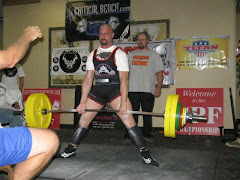
Nick DePaolo-350 Deadlift


Best Lifters: Yani, Sarina & BIG D


"BIG D" RAW UNITED WORLD RECORD LIFTS


Mon. 5-18-09 WOD

Group Mug Shot
Warm-Up: 3 Rounds: 60 sec. each exercise
Squats + Jump Rope + Push Ups

W.O.D.: Work on proper form and technique
Bench Press(Men 100-185, Women 45-100) +
Deadlift (men 135-200, Women 65-135)

10-9-8-7-6-5-4-3-2-1 reps of each

Russian Kettlebells for Women?
-Absolutely!Lisa Shaffer, RKC

Listen up, ladies! I finally found the perfect form of exercise. Training with kettlebells! I won't be going back to traditional weight training because kettlebells give me quicker results and more challenging exercises. The name of the game in fitness these days is intensity. That is, everyone is trying to get the most out of their workouts for maximum results in the shortest amount of time. Kettlebells will provide intensity. Unlike dumbbells, kettlebells displace weight, so physics forces body awareness and requires you to work against resistance through a longer range of motion. This increases the intensity of your workout and improves flexibility. Because the kettlebell hangs behind your hand and rests on your forearm it makes the weight easier to balance. And the handle makes it easier to hold on to for ballistic movements. This more intense workout will result in achieving your fitness goals more quickly. I know after reading about kettlebells either in ads or on the www.DragonDoor.com website, they can seem intimidating. After all, anything proven to enhance the performance of Special Forces units, Olympians, or professional athletes must be hard core right? Even the kettlebell itself looks a little uninviting, a round, black cannonball looking thing with a handle? What could a woman possibly get out of this? Everything. Kettlebells will improve your quality of life. They will increase your energy level, reshape your body, increase your strength, relieve stress, increase your metabolism and take up less time. No matter what stage of life you find yourself, everyone is busy these days. Usually the first thing to get cut out of a busy schedule is your workout. However, even the busiest mom, career woman or student can spare 15 minutes a day. And now with kettlebells that is all you need. I used to spend over an hour in the gym with weight training and cardio exercise almost everyday. I now have two young children and I don't have time for long workouts. I still made time to work out but my training was inconsistent and something always had to be left out. Usually it was my cardio. I did get back in shape after having my children but my fitness level wasn't where I wanted it to be. Kettlebells solved my workout problems by giving me a great cardio and strength training workout at the same time. After only 6 weeks, and having hardly scratched the surface of all the kettlebell specific exercises, I looked better and felt better than I had in years. In fact, I had reached a fitness level higher than at any time during my 20 plus years of traditional weight and cardio training! I attribute my success to the better and more intense workouts I get with the kettlebells. I am also more consistent due to the decreased time working out with a kettlebell requires and the different and greater variety of exercises. Women often complain about how a slow metabolism contributes to their inability to lose weight. Increasing your metabolism is easy. High rep ballistic exercises and circuit training with kettlebells really boost your metabolism. You can include ballistic exercises in every workout. Swings, snatches, and cleans can be performed in numbers from one to hundreds. Just make sure you do the ballistics at the end of your workout. You want to be fresh and strong for all the pressing exercises for safety reasons. You can perform ballistic exercises in greater numbers with kettlebells than with dumbbells because it is easier to keep your technique in check and easier to hold. Here is how to perform your sets to increase your metabolism and melt fat. Make sure your sets last a minute, then rest for only one minute, then move on to your next set. Working out this way really gets your heart rate going. Start slowly and work your way up. You shouldn't have to worry about dieting again. I didn't diet and I have achieved my goals, and you will too. As long as you control the quality of food you eat, and don't increase the quantity, you should lose weight and decrease body fat. Give these beginner exercises a try: Box Squats, Good Morning Stretches, and 2-Arm Swings. Start with a 20-pound dumbbell. These exercises will give you a good overall body workout and give you a good feel for what training with kettlebells is all about. Perform these exercises in a circuit of 3 to 4 sets and work out three times per week. The Box Squat: 10-20 reps. The box squat will help you perfect your squat form, work your legs and hips, plus improve your flexibility. Take a sturdy chair or box; stand about 12 inches in front of it, facing away from it. Your feet should be a shoulder distance apart. Hold the weight in front of you with both hands at about chest level. Remember to keep your weight on your heels and sit back on the box by arching your lower back and pushing your butt back as you descend. Lightly touch your butt to the box and then plant your feet and stand up squeezing your glutes the whole way up or, you can sit lightly on the box and rock back only on your butt then instantly rock forward and stand up. This will also work your mid-section. The Good Morning Stretch: 5-8 reps. The GM stretch will strengthen your glutes, hamstrings and tone your hips. Bend at your hips, arch your back and stick your butt out. Your knees should be only slightly bent. Hold the weight with both hands hanging down. Lower yourself slowly, pause at the bottom, and then rise up by squeezing your glutes the whole way up. Don't lean back when you are straight up. You should feel a really good stretch in your hamstrings and all the way down the back of your legs. The 2-Arm Swing: 15-20 reps. Swings work your hips, inner thighs, glutes, shoulders, back, and help flatten your stomach. You also get a great cardio workout. Place a 20-pound dumbbell on the floor between your feet. Your feet should be shoulder width apart and your knees should track them. Squat down and pick up the weight with both hands. You should feel the weight loading your hamstrings. Then stand up explosively and at the top push your hips forward tucking your tail in. At the same time your arms will project the weight up about waist level. Your arms act as chains holding the weight. You do not use your arms or shoulders to lift the weight. The ballistic movement of your legs and hips is what swings the weight up. When you get to the top with your hips forward, immediately squat back down with the weight descending and swinging through your legs and behind your knees. Continuously repeat the move for 10-20 explosive reps. Once you have tried this with a dumbbell imagine a three-fold increase in intensity! That is what working out with kettlebells is all about and results come quickly. In as little as a week you can decrease body fat and see more muscle tone and definition. Kettlebells deliver on the promises. When you get the proper form down for the exercises your strength and flexibility will increase rapidly. You will be moving into new and more advanced drills in no time. Adding even more variety and intensity to your workouts. After almost a year I'm still making progress. Plus my workouts are so varied that I no longer get bored. I look forward to working out with my kettlebells every day. Challenge yourself and experience exercise at the maximum level with kettlebells!

Saturday, May 16, 2009

Sat 5-16-09 NO BOOT CAMP

Sorry CrossFitters. NO BOOT CAMP this Saturday May 16th, 2009.

On Saturday May 16th, 2009 we will be hosting The D & D Push/Pull Powerlifting Meet with RAW United. Please feel free to come out and give your support to our lifters and enjoy the show.


If you have any questions please contact Jeremy at 239-851-3940 or at crossfittb@yahoo.com.

Science is Hot: Fat Loss Edition

Science is Hot: Fat Loss Edition

This is the second post is our "Science is Hot" series, featuring Mathieu Lalonde, a chemist with a lifelong interest in nutrition and human performance. As a reminder, Matt obtained his bachelor's degree in science with a concentration in chemistry from the University of Ottawa (Canada), and a PhD in organic chemistry at Harvard University. He is currently pursuing post-doctoral studies in inorganic chemistry at Harvard. (Translation: Matt is scary Smart.) In addition, Matt has a real gift for translating complicated and highly technical concepts into practical, applicable advice tailored specifically for CrossFit athletes.

Our first 
Science is Hot post came from some conversations I had with Matt while hanging out at the Science Exercise Certification in January. Over the course of the next few weeks, that post received more hits than any other entry in the history of this blog. Because of the response, and as a result of the huge number of questions I've been responding to lately about performance, nutrition and fat loss, the second post in this series deals specifically with that subject.

__________________

Let’s talk about fat loss. Isn’t it just a matter of “calories in, calories out?” 

“Calories in, calories out” belongs on the shelf of flawed hypotheses, right next to “a calorie is just a calorie”. Gary Taubes does a good job of debunking these myths in his book entitled 'Good Calories Bad Calories'. The "calories in, calories out" hypothesis arises from the application of thermodynamics to the human body. Energy conservation tells you that:

ΔE= Ein – Eout 

Where 
ΔE is the change in energy, Ein is the energy intake (typically in units of calories), and Eout is energy expenditure. From this simple equation, it appears that weight loss should occur if energy expenditure exceeds energy intake. In other words, a caloric deficit (i.e. Î”E is negative) must be created in order for weight loss to occur. Wouldn’t it be great if it were that simple?

The problem with “calories in, calories out” is that Ein and Eout are assumed to be independent variables - that you can reduce Ein 
without changing Eout. In reality, the two variables are somewhat dependent. For example, if an individual consumes an amount of calories that is near or below starvation levels, the individual's basal metabolism will decrease in an attempt to conserve energy. In this case, reducing Ein led to compensatory decrease in Eout. (This is why diet and exercise are such a powerful combination; exercise allows one to increase Eout.)

But even then, things aren’t that simple, right? 

Right. Treating the human body like a motor completely ignores all of endocrinology; the hormones involved in the mechanisms of energy storage and release. Therein lies the real flaw of the “calories in, calories out” hypothesis. When endocrinology is ignored, it is easy to think that fat people are fat because they don't exercise or they eat too much. For some folks, that is true. But for people with metabolic syndrome who suffer from chronically elevated insulin levels and insulin resistance, the 
opposite is true. Taubes' genius lies in the fact that he was able to properly identify the cause and the effect. If someone has chronically elevated insulin levels or insulin resistance, fat stores are not accessible for energy. In this case, fat people don't exercise because they are fat, or eat too much because they are fat. Obesity is the cause; lethargy and hunger are the effect. Everything gets turned on its head.

So what about “a calorie is a calorie”? 

"A calorie is a calorie" is simply incorrect because it also ignores endocrinology; in this case the food’s effect on human hormones. 
The source of the calories is just as important, if not more, than the total number of calories itself. A common cause of insulin resistance and elevated levels of insulin in the bloodstream is excess consumption of refined carbohydrates. If individuals with chronic insulin resistance try to lose weight by simply cutting calories or exercising without changing their diet, they will end up losing muscle mass as opposed to fat. On the other hand, if someone with a diet consisting mainly of insulin-spiking foods (sugar, starch, bread, dairy, etc..) switches to a diet consisting mainly of lean meat, vegetables, nuts and seeds, some fruit, little starch, no sugar, no grains, no dairy, no legumes ("Paleo"), then weight loss may occur even if the diets are isocaloric (i.e. have the same amount of calories).

This becomes apparent when high-carbohydrate low-fat diets are compared to isocaloric high-fat low-carbohydrate diets. People on 1,500 calorie high-fat, low carbohydrate diets
lose weight and feel better than people on the same calorie high-carbohydrate, low-fat diets. In fact, cases of severe dementia as the result of 1,500-calorie low-fat high-carbohydrate diets have been documented, while people on a high-fat, low-carbohydrate diet have excellent biomarkers of mental and physical health.

Why is a higher fat diet so important if you’re trying to lose body fat? 

Fat makes it much easier to live on a caloric deficit. The consumption of fat causes the release of various compounds that tell your brain you are no longer hungry.
 Fat consumption also changes the expression of a gene that synthesizes adropin, which plays a role in energy homeostasis and lipid metabolism.

In addition, fat consumption triggers the release of N-acylphosphatidylethanolamine, which inhibits food intake, and foods that are high in fat also have a much lower insulin response when compared to foods high in carbohydrates. This is why Robb Wolf recommends cutting out carb blocks and replacing them with fat blocks for people who are always hungry on the Zone. Not only does subbing fat for carbs prevent hunger, but it also increases the caloric content of the diet.

Fat is also responsible for the synthesis of a variety of hormones. Interestingly, it has been shown that high fat diets have a vitamin sparing effect compared to high carbohydrate diets. Most importantly, as long as fat is available for fuel, the body will not catabolize muscle for energy. 
So the consumption of fat also has a muscle sparing effect.

But we do need SOME carbs.

Yes. Ideally, one would only want to consume enough complex carbohydrates to be able to perform optimally during exercise, with the remainder of the calories consisting of protein and fat. Eating only as many complex carbohydrates as absolutely necessary is especially true if the carbohydrates are coming from insulin spiking sources such as bread. (You shouldn’t have to worry about your intake of vegetables, however.)

So what’s going on with CrossFitters who write to me, saying they CrossFit 3/1 and are only eating 1,400 calories a day… and STILL don’t seem to be losing fat?

There could be a lot going on here. First and foremost, what are these CrossFitters eating? If it’s high carb, low fat, then I’m not surprised. If they are eating Paleo (meat, vegetables, low fruit, with plenty of healthy fats), then the problem might be elevated cortisol levels due to too much stress. 
Stressors include one or a combination of too few calories (i.e. starvation), too much exercise, not enough sleep, as well as a variety of other work or life related factors. 

Assume a CrossFitter is already on a solid Paleo diet. How do they know if they need to eat MORE or LESS to jump-start fat loss? 

It all depends on how much they were eating to begin with – this one is trial and error. If they were eating too much, caloric restriction might see them leaning out and performance could improve. If they were eating the right amount of food and cut more calories, they might get sluggish and become more likely to over train (or under recover). The problem isn’t necessarily one of basal metabolism, which tends to slow down when a significant caloric deficit is created, but rather of energy stores. If food intake is insufficient for replenishment of muscle and liver glycogen, intense bouts of exercise such as CrossFit may become somewhat more challenging. That is because the amount of glycogen used by the body increases with the intensity of the exercise. The glycogen stores of someone on a low calorie diet may not be able to supply sufficient quantities of glucose to maintain a high level of intensity for the duration of the workout. The same can be said of individuals who have to resort to a very low carbohydrate diet (i.e. just meat and vegetables) in order to lose body fat.

Low glycogen stores aside, burning fat for energy (Krebs cycle) requires more oxygen than burning glucose. When oxygen demand is high, such as during most CrossFit workouts, the body will shift energy sources in order to use oxygen as efficiently as possible. If glucose, from glycogen, is not available, fat will be burned for fuel… but less oxygen will be available to the muscle. (As an aside, the purpose of a post workout meal consisting of complex carbohydrates such as sweet potatoes is to replenish spent glycogen stores.)

So if you’re eating to lean out, can you still maintain performance? Or is there always a trade-off? 

It depends on food quantity and quality. If you have a small caloric deficit, your performance might actually improve as you lose body fat. This has been shown time and again by many who follow ‘The Zone Diet’ or ‘Paleo/Zone’. Unfortunately, ‘The Zone Diet’ doesn’t work for everybody. In the case, a ketogenic cyclic-low-carbohydrate diet is typically the way to go. Decreased performance is almost a guarantee here, however, given that the point of the diet is to deplete glycogen stores to allow fat to be burned for fuel. The cyclic nature means that you gorge on complex carbohydrates at specific meals and specific times in order to replenish spent glycogen stores. A male CrossFitter on a Paleo diet with an already low body fat level between 10% and 15% can further decrease his body fat level with a ketogenic cyclic low carb diet, but performances will suffer to some extent. You can find a great description of a CLC diet in Rob Faigin’s 
Natural Hormonal Enhancement.

How do I figure out how much I need to eat to cut body fat without sacrificing muscle?

If you exercise regularly and your protein consumption is adequate for the amount of exercise that you perform, it is unlikely that you will lose a significant amount of muscle mass. The amount of food required will be found through trial and error, sticking with each “phase” for two weeks to one month before evaluating the effectiveness and making changes. Exercising during this whole process is key. Here is what I would recommend.

1. Use the Zone Calculator to determine your protein intake. Have protein at every meal to meet this intake and use lean meat (preferably grass-fed), fish and sea food, poultry and wild game as well as eggs as your main sources of protein.

2. Eliminate highly refined and sugar laden foods from your diet. Replace some of the calories with foods containing good fats like olives, avocados, coconut, nuts and seeds.

3. Eliminate foods made from grains or grain-like substances (such as buckwheat). Breads, cereals and pasta are the number one targets here.

4. Eliminate dairy.

5. Eliminate legumes.

6. Eliminate dried fruit and fruit juice. Try to eat more vegetables than fruit. If you eat fruit, make it fresh fruit.

7. If you are down to lean meat, eggs, fish and seafood, poultry, vegetables and good fats and still not losing body fat, then slowly cut the calories from fat until you start to lose weight.

__________________

In summary, food quality ("Paleo") is both the most important factor in your diet - and also where you'll see the most bang for your buck. Fat is your friend. The Black Box is important - get your quality in line, then start playing around with quantity and macronutrient proportions. Change things one at a time, so you'll know what's working and what isn't. And recognize that for most of us, in the quest for fat loss and the perfect six pack, at some point, there ARE performance trade-offs.

Post any follow-up questions to comments. Matt will do his best to answer them, but is leaving on Friday for the Eastern Canadian Qualifiers. If I can, I'll pick up where he left off, or I'll recruit Dallas to help out (since almost everything I know about diet and nutrition, I first learned from him).

Best of luck this weekend, Matt, and thanks for dropping more of your Science-y genius on us.

Friday, May 15, 2009

How flexible are you???

This goes wayyyy beyond your everyday stretching routine. 
Try this one at home sometime.


Dietary Fat Loading for Destroying Body Fat

Dietary Fat Loading for Destroying Body Fat, Part 2
By Eric Serrano, MD and Scott H. Mendelson
For www.EliteFTS.com

This is part two of a two-part series.
Flax versus fish oil

Many people ask why I don’t suggest flax seed oil for fat loss, and the answer is simple. People in their 30s typically have reduced activity levels of the crucial enzymes needed to convert the omega 6 within the flax to a “usable” omega 3 efficiently. As a result, the body will store the excess omega 6 as fat. Caffeine, high insulin, alcohol, and ephedrine all reduce the enzyme activity. We get a ton of omega 6 from the food supply, but omega 3 is severely lacking. Your supplemental fats should come from omega 3 based fish oil. No, you can’t get enough from eating fish. I don’t care if you ate fish for every meal. You still wouldn’t come anywhere close. Be careful. Don’t consume fish that are high in toxins or farmed raised fish, which have a diminished nutrient density.

Unfortunately, the waters around the world are polluted to a great extent. Therefore, fish will also contain a fair amount of toxins. The body will aim to protect you against the ingestion of toxins, therefore products high in toxins will be expelled all together. I designed the Alpha Omega, which contains ingredients that go through an expensive molecular distillation for toxin elimination. This is a very expensive process so a majority of companies will bypass this step in order to sell one million caps at $14.99. But believe me when I tell you, you get what you pay for, especially when it comes to fish oils.

The ratio of ingredients within any supplement is very important, which is why I have invested thousands of hours into perfecting what I call utilization efficiency. You can’t just slap together a few ingredients and expect them to interact well. There must be a method to the madness or there will be competition for absorption and ultimately wasted active ingredient. The inclusion of CLA, GLA, and Vitamin E add tremendous value, supporting accelerated fat loss and performance.

Amino load to elevate fat burning and performance and accelerate recovery
By definition, most fat loss plans involve a deficit of energy intake. One way to fill the gap to prevent low energy and promote peak performance is to Amino Load with 100% MR and Muscle Synthesis. This amino acid combo provides an alternative energy source throughout the day when taken between meals. In addition to preventing muscle break down, the huge influx of aminos makes the brain and muscles believe that a great deal of food has been consumed. As a result, the metabolic rate increases. However, there is nothing to burn except stored fat because the aminos have little caloric value. Providing a powerful alternative energy source, Amino Loading ensures elevated rates of performance and accelerated recovery.

Non-fat loading day
Dietary fats
30 percent
Protein
1.5 g–2 g per lean pound for males
0.8 g–1 g for lean pound for females

Carbohydrate
This is a low carbohydrate plan. Focus your intake on items such as high fiber green vegetables. All are ok except potatoes, peas, carrots, and corn.
Fat loading schedule

Men should fat load every fifth day initially. After four weeks, you can try increasing or decreasing the frequency of the fat loading days.
Women should fat load every 7th day for two weeks and then take two weeks off from fat loading before resuming again.

The best day for fat loading is the day following a leg training session. On the fat loading day, you can do a medium volume weight training workout. You can follow this cycle for up to a month at which time strategic carb loading should also be included in the plan. This will be a topic included in our next article.

Fat loading day guidelines
Take half of your lean body mass as a starting point in grams of dietary fat. In this case, we would use 100 g for a 200-lb man.

Your good fat intake breakdown is 70 percent of your total caloric intake on fat loading days (1–1.25 g of protein per lean pound of body weight for both men and women).
30 percent of fat intake saturated

Organic grass fed beef is the best choice because these cuts of beef retain fewer toxins in the fat cells. This can impact your general health and rate of progress.

· Whole eggs (organic preferred)
· Butter
· Heavy whipping cream

Initially, experiment with cheeses, but as you get closer to your fat loss goal, cut them out.

60 percent monounsaturated fats
· Extra virgin olive oil
· Raw nuts
· Avocado
· Natural peanut butter
· Alpha Omega

10 percent or less polyunsaturated fats
· Coconut oil

Here is one example of a highly effective fat loading plan specific to fat loss. Watch out for future articles regarding fat loading for muscle growth.

Example fat loading day for a 200-lb man

Breakfast
· 4–6 whole eggs
· 2 cups Spinach
· ¼ cup of cheddar cheese
· 3 Alpha Omega

Mid-morning amino load
· 1 scoop 100% MR
· 5 Muscle Synthesis caps

Snack one
· ½ cup raw nuts

Lunch
· 8 oz Organic beef steak
· 2 cups broccoli
· 1 tablespoon butter
· 1 tablespoon extra virgin olive oil
· 3 Alpha Omega

Mid-afternoon amino load
· 1 scoop 100% MR
· 5 Muscle Synthesis caps

Snack two
· 2 tablespoons natural peanut butter
· Celery

Dinner
· 10–12oz oz salmon
· 1 tablespoon extra virgin olive oil
· ½ avocado
· Salad (cucumbers, onions, spinach, etc.)
· 3 Alpha Omega

Pre-workout (30 minutes before training)
· 2–4 scoops 100% MR
· 10–20 Muscle Synthesis caps

Post-workout (immediately after exercise)
· 2–4 scoops 100% MR
· 10–20 Muscle Synthesis caps

30 minutes following training
· 6–10 scoops Get Lean protein

Non-fat loading day
Breakfast
· 10 oz lean protein (chicken sausages, turkey bacon, turkey sausage)
· 2 cups vegetables
· Cook with butter or olive oil (medium heat; no non-stick spray)
· 3 Alpha Omega

Mid-morning amino load
· 1 scoop 100% MR
· 5 Muscle Synthesis caps

Mid-morning snack
· 4–6 oz lean protein
· 2 cups assorted vegetables (spice accordingly)

Lunch
· 8–10 oz buffalo burgers
· 2 cups vegetables

Mid-afternoon amino load
· 1 scoop 100% MR
· 5 Muscle Synthesis caps

Late afternoon snack
· 4–6 oz lean protein (skinless chicken, turkey, seafood)
· 2 cups assorted vegetables (spice accordingly)

30 minutes pre-workout
· 2–4 scoops 100% MR
· 10–20 Muscle Synthesis caps

Immediately after training
· 2–4 scoops 100% MR
· 10–20 Muscle Synthesis caps

30 minutes post-training
· 6 scoops Get Lean protein

60 minutes post-training (dinner)
· 8–10 oz fish or seafood
· 2 cups vegetables
· 1 tablespoon extra virgin olive oil
· 3 Alpha Omega

Infinity Fitness INC provides training, fitness, and nutritional information for educational purposes. It is important that you consult with a health professional to ensure that your dietary and health needs are met. It is necessary for you to carefully monitor your progress and to make changes to your nutritional and fitness program to enjoy success. Infinity Fitness does not employ dieticians or health professionals and assumes no responsibility or liability for your personal health and condition.

These statements have not been evaluated by the Food and Drug Administration. Products are not intended to diagnose, treat, cure, or prevent any disease. SST™, Superior Supplements and Training™, 100% MR™, Muscle Synthesis™, Muscle Synthesis Powder™, Alpha Omega M 3™, Amino Loading™, Fat Reduce™, Zero Tolerance Fat Loss Plan™, and Get Lean Protein™ ,Fat Loading™, Chronological Nutrition™ are Trademarks of Superior Supplements and Training LLC, OHIO USA. Your results may vary and depend on many factors. No Endorsements of any product or training system is intended, expressed or implied, by any athlete who may be pictured in illustration of this Article. Copyright © Infinity Fitness & Training Inc, OHIO USA 1999-2009, All Rights Reserved.

Scott H. Mendelson, author of the e-book, 100% Fitness Solution, and director of Infinity Fitness, is a highly regarded performance nutrition and training specialist. In addition to his celebrity and executive clients, Scott works daily with professional athletes from the NFL, NHL, MLB, and NCAA. He has built an excellent reputation providing effective supplements, cutting-edge information, customized programs, and unmatched service to thousands of clients worldwide. Scott is the special assistant to Eric Serrano, MD, and helps with the design of training and nutrition programs for Serrano’s family practice patients in Columbus, Ohio.

Please send questions to scott@infinityfitness.com.

Thursday, May 14, 2009

Fri 5-15-09 WOD

Warm Up:
Shoulder Stretches
Squats
Lunges
Band Presses
Band Rows

WOD: (12, 10, 8, 6, 4, 2)
Bench Press (men 155-185, women 55-100)
SDLHP (men 65-95, women 45-65)


Sorry CrossFitters. NO BOOT CAMP this Saturday May 16th, 2009.

On Saturday May 16th, 2009 we will be hosting The D & D Push/Pull Powerlifting Meet with RAW United. Please feel free to come out and give your support to our lifters and enjoy the show.


If you have any questions please contact Jeremy at 239-851-3940 or at crossfittb@yahoo.com.

Fitting Healthy Habits Into Your Hectic Life
13 Tips to Get More Nutrition and Fitness into Your Day

-- By Life Coach Mary Guarino, Ph.D.
There just doesn’t seem to be enough hours in the day to accomplish everything you need to do. And it can feel like an added stressor when you are trying to integrate healthy habits into your already hectic schedule. But if you make time for healthy habits, you’ll find yourself with extra reserves of energy that will lower your stress and help you get through life’s challenges.Here are a few things you can start doing right now to make healthy habits a relatively painless part of your routine:

Drink water throughout the day. You don’t hear this nearly enough: water is an all-purpose wonder-substance. It’s great for your skin, your digestive system, and circulatory system, and aids in weight loss and cellulite reduction. If you feel fatigued during the day, it’s often because you aren’t hydrated properly. Drink water throughout the day, sipping from a large bottle or glass. If you have it nearby, it’s easy to remember. If you don’t like the “taste” of water, keep a supply of lemon so that you can add a slice to your water – it cuts any bitterness, adds a bit of vitamin C and makes it taste more festive!

Cut back on the amount of soda and coffee you drink. Sugar and caffeine dehydrate you and create energy rushes followed by crashes, which are ultimately energy-depleting. Substitute with drinks like green tea or 100% fruit juice.

Replace high-sugar foods with low-sugar versions. Cutting back on the amount of refined sugar you consume helps reduce calories and weight gain and also helps you avoid the energy slumps that come from sugar withdrawal. Items high in refined sugar include most soft drinks, cereals, baked goods, and of course, candy and ice cream. Look for low-sugar or no-sugar versions of these, or simply opt for healthy snacks instead.

Stock up on healthy, portable snacks. When you are grocery shopping, pick up bags of baby carrots, string cheese, nuts, fresh and dried fruit, single serving packs of applesauce, yogurt, wholegrain crackers, peanut butter, turkey jerky, etc. Having healthy portable snacks around will help you avoid bad vending-machine, convenience store and fast-food options. Read some more portable snack ideas.

Take the time to plan healthy meals for the week. Spend 15 minutes or so to map out your meals. Keep it simple. Then, when you shop for groceries, make your purchases based on the meals you will make during the week. This will help you avoid relying on less healthy take-out or fast food choices. Learn even more grocery store tips.

Purchase frozen, ready-to-cook ingredients. Frozen fruits and vegetables have high vitamin and mineral content because they don’t sit around losing these nutrients for long before they are preserved. Although you’ll want to keep plenty of fresh fruits and vegetables around, it’s great to have frozen produce available for quick meal additions and smaller servings. Also, some grocery stores offer frozen boneless chicken breasts and a wide variety of seafood items in re-sealable packages. These are great for quick, healthy meals.

Pack your lunch the night before. You'll have given yourself the gift of extra time in the morning and you will assure that you have a healthy meal during the day. Don’t forget to pack snack items so you can avoid the vending machine.

Cook double batches of whatever you’re cooking. When you prepare dinner, especially on weekends, cook extra and freeze to use for another dinner or lunch. Then, you'll have a healthy meal ready to go when you are.

Give yourself some slack. If you are stressed out about preparing healthy meals every day, use what some experts call the "80/20" rule in your eating. If 80 percent of what you eat is healthy, then allow yourself to take it a little easier for the remaining 20 percent. You and your diet will survive.

Fit in exercise whenever you can. Experts recommend that adults exercise a minimum of 30 minutes three times per week. Aim for this amount, but don’t kick yourself if you can’t meet this goal. Any amount of exercise is better than none. No time to go to a gym? Build a stock of exercise tapes – many have routines that you can complete in 20-40 minutes. Use hand weights or do crunches, leg-lifts and lunges while watching television. Or invest in an exercise bike – you can pedal while catching up on your reading. Think of what would be most interesting to you and what best fits your schedule and budget.

Take a walk break during the day. Even 20 minutes can make a difference in your energy level, plus it gives you time to clear your head. If you walk with a friend or colleague, it also gives you time to socialize.

Whenever possible, walk. Increase the amount of time you can walk, versus sit or drive. It doesn’t take that much extra time to park a bit farther from the store entrance, or to make a personal visit to a colleague rather than phoning, instant messaging or e-mailing.

Get enough sleep. Even if you gain more time in your day by cutting back on sleep, you will be less effective throughout the day, as your energy level and cognitive functioning will be reduced. Insufficient sleep also makes you more susceptible to illness. By getting enough sleep, you become more efficient during the time you are awake. Begin integrating some or all of these habits today. Make them part of your normal routine. You’ll be surprised at how little time is involved and how much better you’ll feel! Article created on: 4/16/2004

Week 7: Level 1 Skills Test Complete

Hey CrossFitters,

Week 7 Level 1 Testing is complete. Everyone did an amazing job today and each person passed their next 4 test exercises this week.

Only 1 more week to go. Keep training hard to be the winner of the CASH PRIZE. To date there is $470.00 up for grabs. We have had several people drop out of the competition which lowers the pot unfortunately.

Remember, the 1st male and female to finish all 21 exercises on the Level 1 Skills chart will split the cash prize 50/50. You could walk away with $200.00 - $300.00 in your pocket just for working out. Now that's incentive to get in shape!

Time to train your butts off and start working like crazy to win some BIG $$$$$.


Thank you to everyone that came out to participate. You did a great job. Keep training hard and get ready for next Thursday's test.

Level 1 Skill Test Participants: Week 7:

Sarina Woodworth- Completed:
All 20 exercises are complete. Finish Christine next Thursday

Peter Schmid- Completed:
Incomplete

Doug Hunt- Completed:
Box Jump, Static Hang, Dips, 2000 m. Row 7:07:03
All 20 exercises are complete. Finish Christine next Thursday

Julie Raccicot-Taylor- Completed:
Incomplete

Lindsay Wright- Completed:
All 20 exercises are complete. Finish Christine next Thursday

Shelley Hair- Completed:
Incomplete

Kristi Tuffo- Completed:
Incomplete

Amy McCluskey- Completed:
Incomplete

Sara Kida-Completed:
All 20 exercises are complete. Finish Christine next Thursday

Tenya Meyers-Completed:
Incomplete-Dropped Out of Competition

Melissa Flexsenhar-Completed:
Incomplete

Shannon Stefanacci-Completed:
Incomplete- Dropped Out of Competition

Good luck and train hard,
Jeremy Barnett

Evolved Athletics
"Xtreme Fitness 4 Xtreme People"

Host of:
CrossFit Thoroughbreds
www.cf-tb.com
www.evolvedathleticsfl.blogspot.com
239-851-3940

Jeremy Barnett, ISSA-CFT, Founder
crossfittb@yahoo.com


Wednesday, May 13, 2009

Fun with Erika

Turkish Get Up with Jeremy Barnett & Erika Kiss


Tuesday, May 12, 2009

Wed 5-13-09 WOD

Warm Up: Shoulder Stretches
Squats

Lunges
High Knees


WOD: 2 Rounds Best Time
Run 800 m.

50-Jump Ropes
40-Box Jumps
30-Burpees
20-Push Ups
10-Sit Ups


Sorry CrossFitters. NO BOOT CAMP this Saturday May 16th, 2009.

On Saturday May 16th, 2009 we will be hosting The D & D Push/Pull Powerlifting Meet with RAW United. Please feel free to come out and give your support to our lifters and enjoy the show.


If you have any questions please contact Jeremy at 239-851-3940 or at crossfittb@yahoo.com.


Take Control Of Your Metabolism
Quick Tips for Increased Muscle Tone, Faster Fat Burning, and Energy Levels Like a 9 Year Old!
So many people are talking about how slow their metabolism is and why they need to start taking the latest diet supplement scam, yet they don't even understand how the human metabolism works. So before I even go into how to speed yours up, I want to first go over some of the basics.

What is metabolism? Although there are many scientific ways for me to explain it, and I could make it seem really confusing, like most of the so-called experts do, I won't. I'm going to give you my extremely simple and easy to understand definition... Metabolism is the rate at which your body burns calories to sustain life. I should also note that your body, yes yours, burns calories 24 hours a day, everyday - regardless of whether or not you workout. Remember that your body needs energy all the time, even while you're asleep and that is why skipping meals is the absolute worst thing you can do if your goal is to lose weight (body fat). Before we go any further let's talk about what affects metabolism... What do you think has the biggest impact on your metabolism? Activity levels? Your Thyroid? Age? WRONG! WRONG! and WRONG!
Activity levels, Thyroid function, and age do affect metabolism but not nearly as much as... any idea? It's muscle tissue! The more muscle you have the more calories you burn regardless of how active you are, how old you are, etc. It's live tissue and it's there working for you and burning calories 24 hours a day - each and every day! Here's a list of some of the factors affecting metabolism in order of greatest impact to least: -
> Muscle Tissue - you already know why this is on the top of the list-
> Meal Frequency - the longer you go between meals the more your metabolism slows down to conserve energy-
> Activity Level - important but doesn't make any difference if you don't match your eating to your expenditure-
> Food Choices i.e. low-fat diets tend to result in poor hormone production, which leads to a slower metabolism-
> Hydration - over 70% of bodily functions take place in water; not enough water causes all your systems to slow down and unnecessary stress-
> Genetics - some people have higher metabolisms than others and you can't change genetics but you can still win the battle!-
> Hormone Production and Function - think you have a slow thyroid? It's not likely - before you go blame it on the thyroid first stabilize your blood sugar and throw in some progressive exercise 2-3 times each week-
> Stress - stress also can slow metabolism by placing extra stress and strain on numerous systems. Plus, many people tend to overeat when "stressed out"

Why does it slow down? How many times have you heard someone say, "as soon as you hit 30 your metabolism slows down"? Maybe you've said it. I know I hear it all the time and I got tired of hearing it so I did a little research and found that the metabolism does NOT slow down significantly due to aging but DOES due to a lack of muscle. And, you don't lose muscle quickly due to aging either but due to a decrease or lack of physical stress.

So, the major cause of a slowing metabolism is three fold...
1. You lose muscle due to the lack of physical stress
2. Your body cannibalizes muscle when it needs energy but you won't supply any because you are "dieting" and skipping meals
3. Your activity levels tend to decrease as you get older

So now that we know the problem... what's the solution? Address those 3 issues! I've found through years of experience helping hundreds of people, that increasing your metabolism and getting rid of that excess body fat can often times be quite easy! Yet you'll hear of all these experts telling you how hard it is and why you need to buy their new diet program, supplement, or fitness contraption.

It's not that hard, it doesn't have to be confusing, and you don't need any of that crap! All you need is an understanding of how your body works and the willingness to make some small changes.

Here's my basic formula for jump-starting your metabolism:
Step 1 - Stop the storage of new fat It doesn't make any sense to start an exercise program if you just end up adding new fat later that day. This is a problem that is very common among people who start an exercise in an attempt to lose weight.

See the problem is this... We don't get fat due to a lack of exercise - we get fat because we supply the body with more calories than it needs at a given time. So the solution has nothing to do with exercise - it's all about your eating! And I'm not saying you have to eat low-fat, super clean and healthy diet consisting of salad and tofu only. You can still eat the foods you like, IF you can give the body just the amount it needs. The key is to give the body the energy it needs, but just that amount and not a bunch extra because extra is extra is extra, it doesn't matter what it's from. Salad can be stored as fat, celery can be stored as fat - if it results in extra it can be stored as fat. I should also note that not all extra energy is stored in the fat cells and I will touch on that later. So forget about trying to burn off any fat unless you can first stop storing new fat! Again, you do that by matching your eating to your activity level. This means small, balanced meals or snacks every 2-3 hours and the amount of calories in each feeding should depend on how active you are at that time of day.

Step 2 - Attack the existing fat This requires a combination approach consisting of stable blood sugar/energy levels, and progressive cardiovascular/aerobic exercise and strength training. We already talked about how important stable blood sugar and energy levels are and how to match your eating to your activity level, so now I'd like to cover the exercise part of the equation. In order for the exercise to even be worth your time you must be sure it's progressive. Just because you run on the treadmill for 30 minutes three times a week, that doesn't mean your body has to burn off that unwanted body fat! You have to force the body to make changes and improvements and the ONLY way to do that is to consistently provide a stimulus or stress that is greater than what the body is used to.

Here are some general guidelines on how you can make your exercise progressive and productive:

Strength training-> Change exercises frequently (every 2-4 weeks) -> Increase resistance -> Perform more reps -> Slower reps -> Advanced techniques

Cardiovascular training -> Increase speed/resistance -> Perform intervals -> Increase distance traveled -> Cross train by performing numerous activities
For more specific techniques please check out the all the great articles on metabolism and fitness in the free resources section of my website here: http://www.achieve-fitness.com/free_resources.htm

I should also say that it is extremely important that you have a well thought out and detailed plan to follow. You can't just say "ok, now I know what to do" and then try a little of this here and little of that there. You need a roadmap. If you are serious about achieving your weight loss and fitness goals I highly recommend you get the help of a professional. Whether that means one-on-one personal fitness training, or just a do-it-yourself fitness plan - your chances of success are much greater.

In closing, please remember, it doesn't have to be confusing. Hopefully this information has shown you how easy it can be if you know what you are doing.

by Jesse Cannone CFT, CPRS, CSPNJesse Cannone's website www.achieve-fitness.com

Are you an evening eater?

Is Evening Eating Destroying Your Weight Loss Efforts?

Cues to Eating and How to Control Them
-- By Becky Hand, Licensed & Registered Dietitian

Balanced breakfast? Check
Mid-morning snack? Check
Healthy lunch with your co-workers? Check
Passing up your friend's homemade cookies? Check
Coming home in the evening and going on a feeding frenzy? CHECK!!

Does this sound like the bulk of your days? You're in control, everything is going fine - until you come home starving at night and eat a large dinner, say yes to dessert (and seconds) and finish off a bag of chips before bed. What gives?

From a metabolic standpoint, there is really no reason not to eat food in the evening. A calorie is a calorie regardless of when it is consumed. A morning calorie is metabolized in basically the same way as an evening calorie. However, eating in the evening is a problem for many, not because of the way food is metabolized, but because of the quantity of food that is often eaten.

Skipping meals and becoming overly hungry by evening can lead to nighttime binge eating. Recent studies revealed that when people ate three meals a day only 13% binged. When people skipped breakfast, 24% binged and when people skipped breakfast and lunch, 60% binged. In general, people who spread their meals throughout the day seem to be better able to control their eating. They are less likely to feel hungry and less likely to overeat. So by eating breakfast, lunch, and dinner and planning snacks in between, you can help yourself lose weight as well as maintain better control of your eating throughout the day and night.

For most people, the evening is "down-time," used to relax, watch television, and unwind from the stresses of the day. Others view this as a time to multi-task and catch up on household chores, bills, homework, and other responsibilities. Whether you're winding down or checking off your to-do list, unconscious eating can accompany your routine and result in a massive calorie intake. Devouring a bag of chips, a sleeve of cookies, or a pint of ice cream can occur when your mind is somewhere else.

The Role of Sleep
Consuming a large amount of food before bedtime can also result in indigestion and sleep problems, which can trigger you to eat more during the proceeding days. A growing body of research suggests a connection between obesity and lack of adequate sleep. Statistics show that overweight individuals sleep about 1.8 hours less a week than people of normal weight. Since the 1960's sleep duration for American adults has dropped by as much as two hours a night, while obesity has drastically increased.

Sleep is a regulator of two hormones that effect appetite, leptin and ghrelin. Leptin helps suppress food intake and stimulate energy expenditure, while ghrelin stimulates appetite, fat production, and body growth. When one is sleep deprived, the level of leptin drops and the level of ghrelin increases. The result is a drastic increase in hunger. One study reported a 24% increase in hunger, with excessive, uncontrollable cravings for calorie and carbohydrate packed foods such as cookies, candy and cake. It can all add up to a vicious cycle of late night binges, lack of adequate sleep, uncontrolled snacking, late night binges, and so on.


Are You An Evening Eater? Try this exercise to find out.
Use the Nutrition Tracker http://www.sparkpeople.com/resource/nutrition.asp to track 3-5 typical days of eating. Print each day's results and use your records to answer the following questions:

1. How many meals and snacks did you eat after 5:00 pm?
2. How many meals and snacks did you eat during the day?
3. How many total calories did you consume after 5:00 pm?
4. How many total calories did you consume for the day?
5. What activities occurred while you ate after 5:00 pm?

You may have a problem with evening eating if:
More than one-third of your meals & snacks are eaten after 5:00 pm. More than one-third of your total calories are consumed after 5:00 pm Evening eating constantly occurs with another activity.

Put An End to the Evening Binge Cycle!
You CAN control evening eating disasters. Try these tips to normalize sleeping patterns and fend off hunger:

Plan activities to do throughout the evening, but don't make food a part of the activity:

Take a bath
Walk the dog
Pay bills; balance the checkbook
Play board games with the kids
Call a friend
Keep your hands busy (polish the silver, sew, knit, or do any craft)
Play basketball, baseball, soccer
Read a book or magazine
Try a relaxing fitness video such as yoga or tai chi.
Eat 3 meals daily and 1-2 planned snacks, keeping in mind your total calorie range.
Plan to eat about the same number of calories at each meal throughout the day. The total should be within your calorie range.
Have a low-calorie beverage (diet soda, flavored water, etc.) in the evening.
Make a list of low-calorie snack options. Select one for the evening. Eat it, but no more.
Don't eat mindlessly! Eat all meals and snacks at the kitchen table, keeping all of your attention on the food you're enjoying. Take your time and really enjoy every bite.
Get 7-8 hours of sleep nightly.
Maintain a regular bed and wake time schedule, even on the weekend.
Establish a regular, relaxing bedtime routine.
If you have trouble sleeping, leave the bed (or room) and pursue another activity like reading until you're ready to sleep. Use your bedroom only for sleep and sex.
Finish eating at least two to three hours before your regular bedtime.
Exercise regularly.
Avoid caffeine and alcohol close to bedtime; avoid nicotine altogether.